Heat Transfer and Condensation Systems

Büchiglas Heat Transfer and Condensation Systems are designed for efficient heat management in demanding chemical and pharmaceutical processes. Various types are available, including spiral, shell-and-tube, and U-tube heat exchangers, manufactured from highly corrosion-resistant materials.
ADVANTAGES
APPLICATIONS
TYPES OF HEAT TRANSFER SYSTEMS
MATERIALS
Advantages
- Excellent heat transfer and efficient temperature control
- Visual process monitoring with glass designs
- High corrosion resistance
- Compact design and optimal use of space
- Easy cleaning and maintenance
- Suitable for cGMP processes
- Modular design and flexible configuration options
- Safety chambers for leak detection in shell-and-tube heat exchangers
- Wide range of materials and material combinations
Applications
- Chemical synthesis
- Extraction and evaporation
- Purification and crystallization
- Distillation and reflux distillation
- Azeotropic distillation
- Cryogenic reactions
- Solvent regeneration, recycling, and purification
- Solvent condensation during drying processes
- Acid regeneration and purification
- API and HPAPI production
- Fine and specialty chemicals
- Agrochemicals, polymers, paints, coatings, and other industrial applications
Types of Heat Transfer Systems
- Spiral heat exchangers — heat transfer surfaces from 0.1 to 1.6 m²
- Shell-and-tube heat exchangers — heat transfer surfaces from 0.6 to 23 m²
- U-tube heat exchangers — heat transfer surfaces from 1 to 10 m²
Materials
- Borosilicate glass
- Glass-lined steel
- Silicon carbide (SiC)
- Hastelloy®
- Titanium
- Tantalum
- Stainless steel
Various material combinations are available depending on the specific process requirements.
Product Related
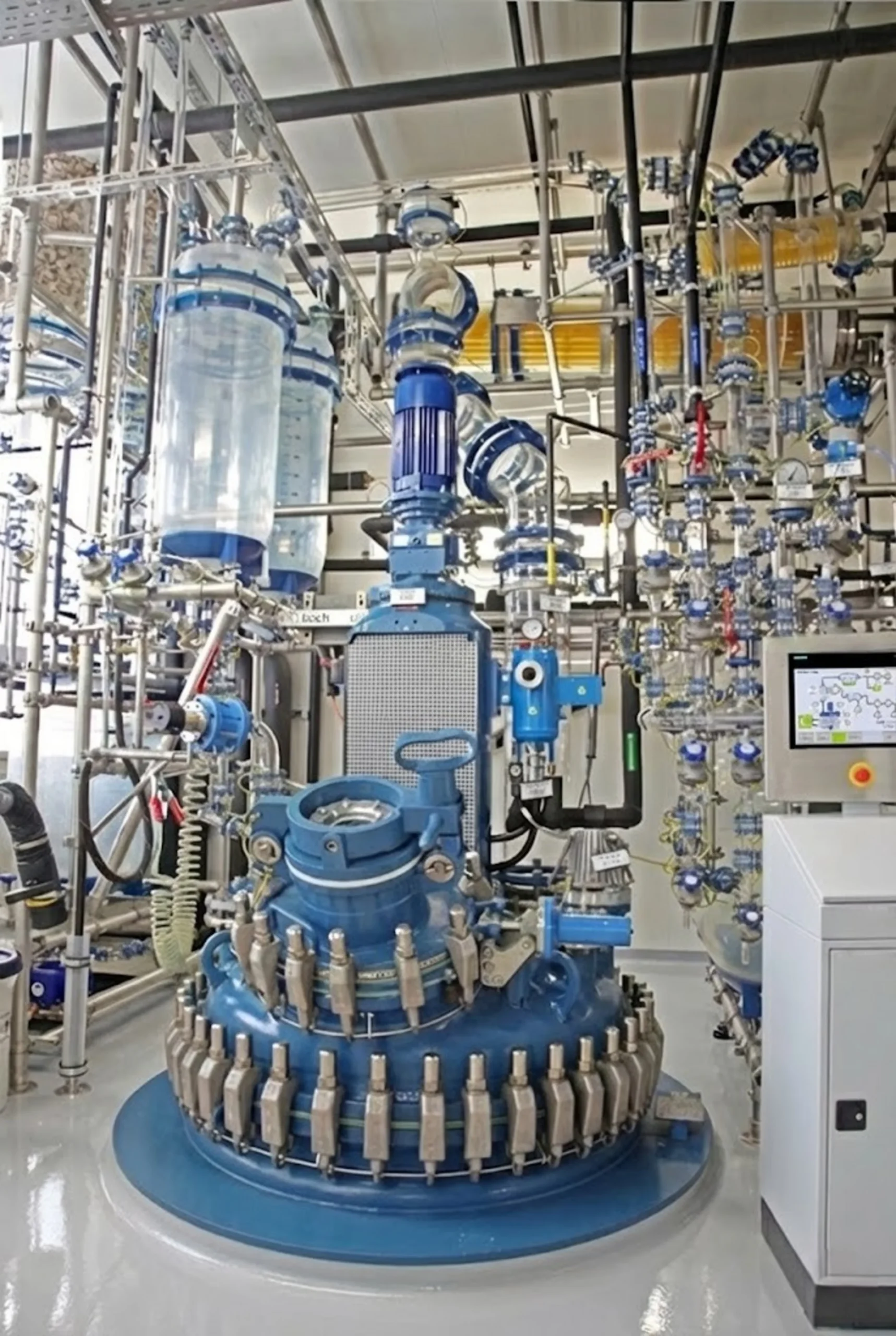
Production Scale Reactor Systems
Büchiglas Production Scale Reactor Systems are fully customized solutions for demanding applications in the pharmaceutical and chemical industries, with working…
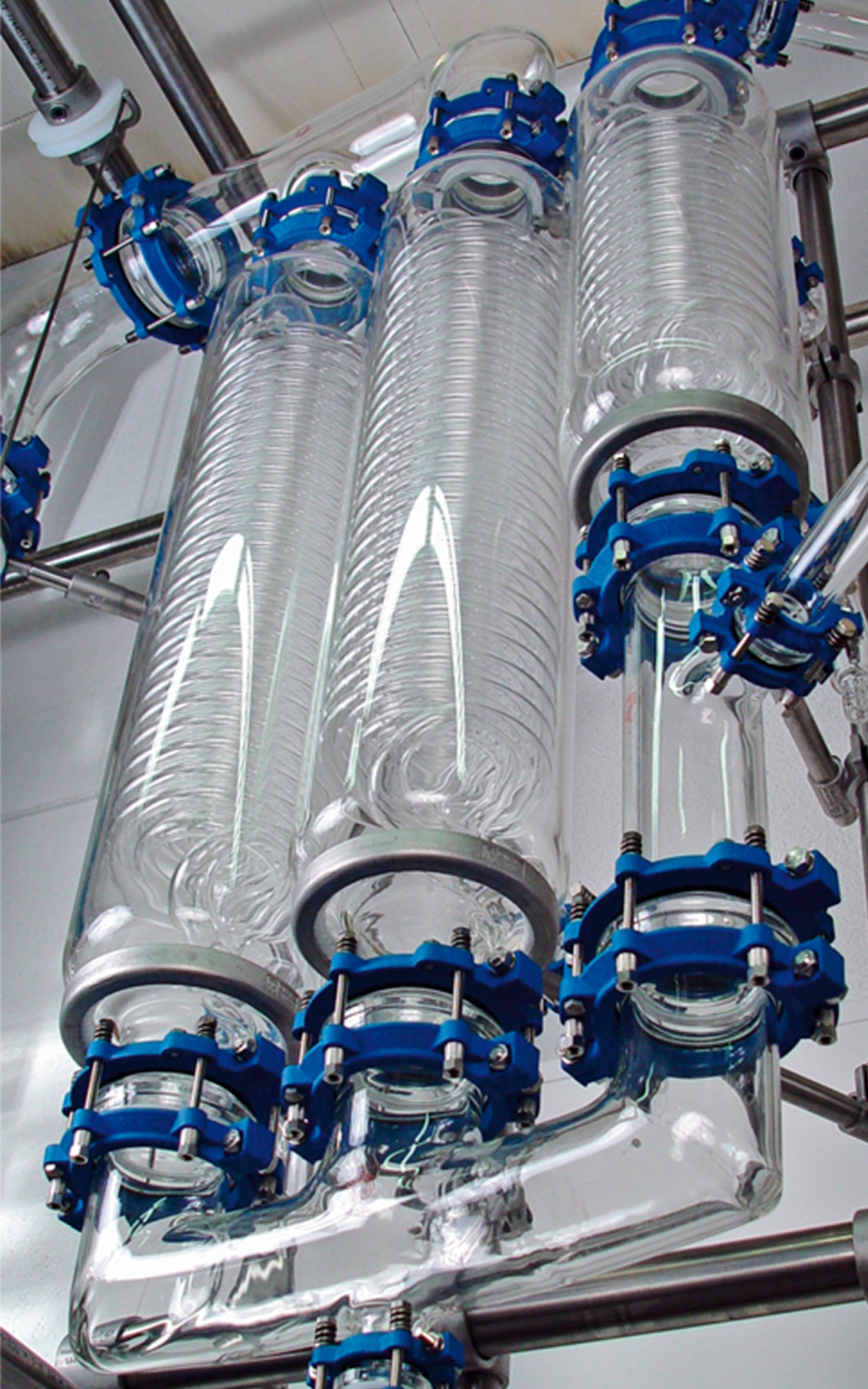
Heat Transfer and Condensation Systems
Büchiglas Heat Transfer and Condensation Systems are designed for efficient heat management in demanding chemical and pharmaceutical processes. Various types…
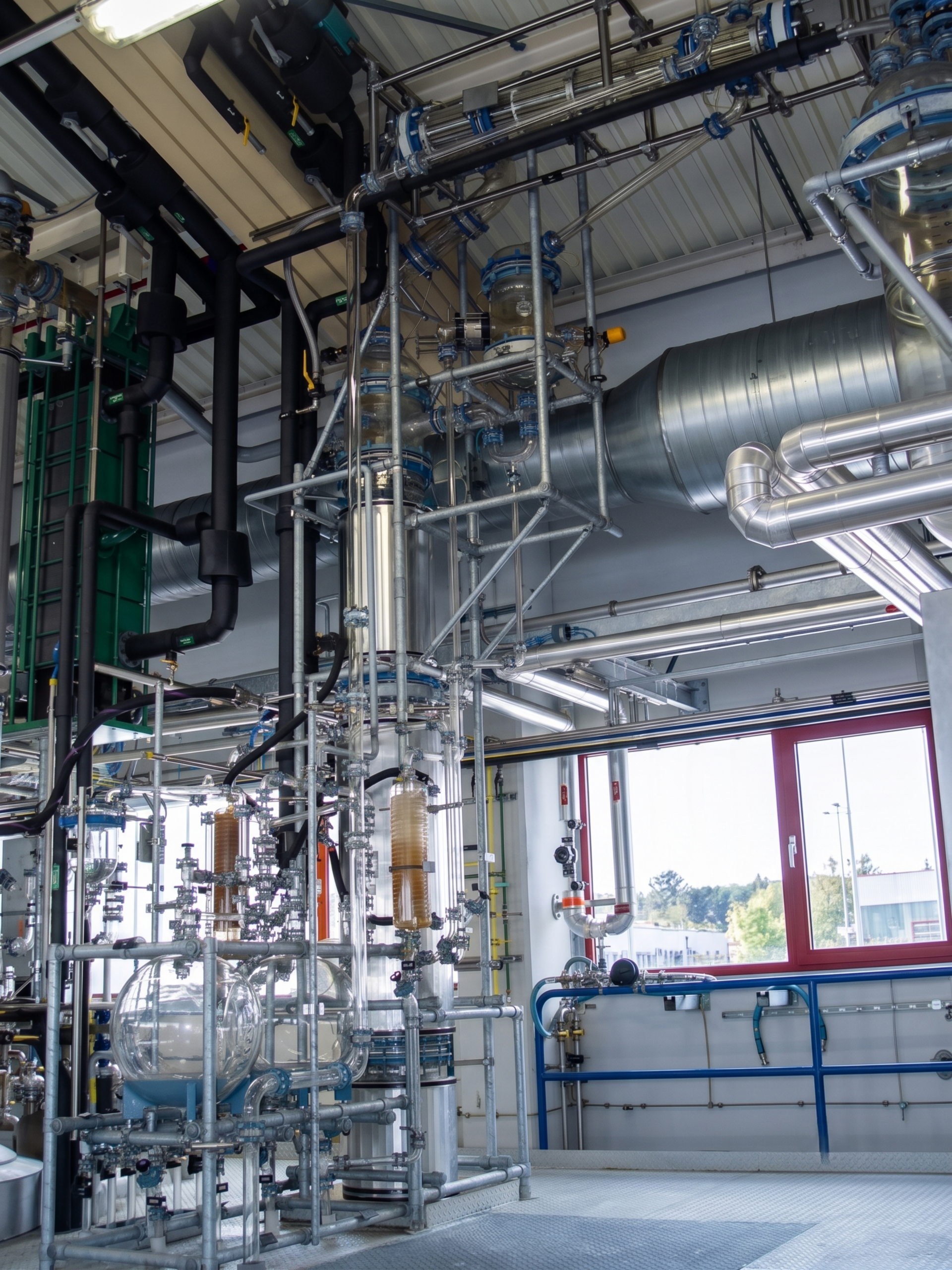
Distillation and Rectification Systems
Büchiglas Distillation and Rectification Systems and glass columns are designed for demanding thermal separation processes, from pilot plants and kilo-lab…
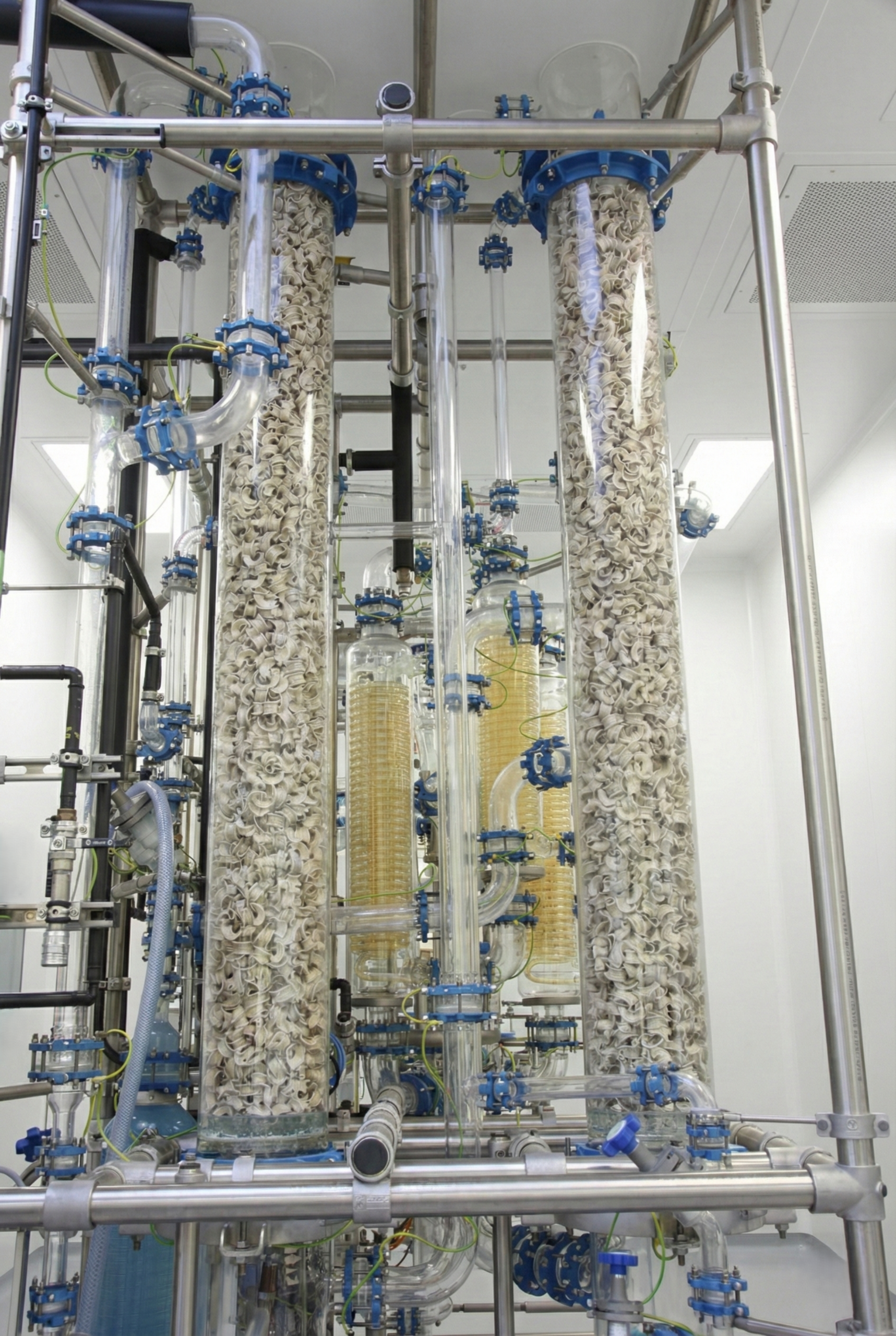
Gas Scrubbing Systems
Büchiglas Gas Scrubbing Systems are designed for the safe and efficient treatment of corrosive, acidic, and alkaline gases in chemical and…