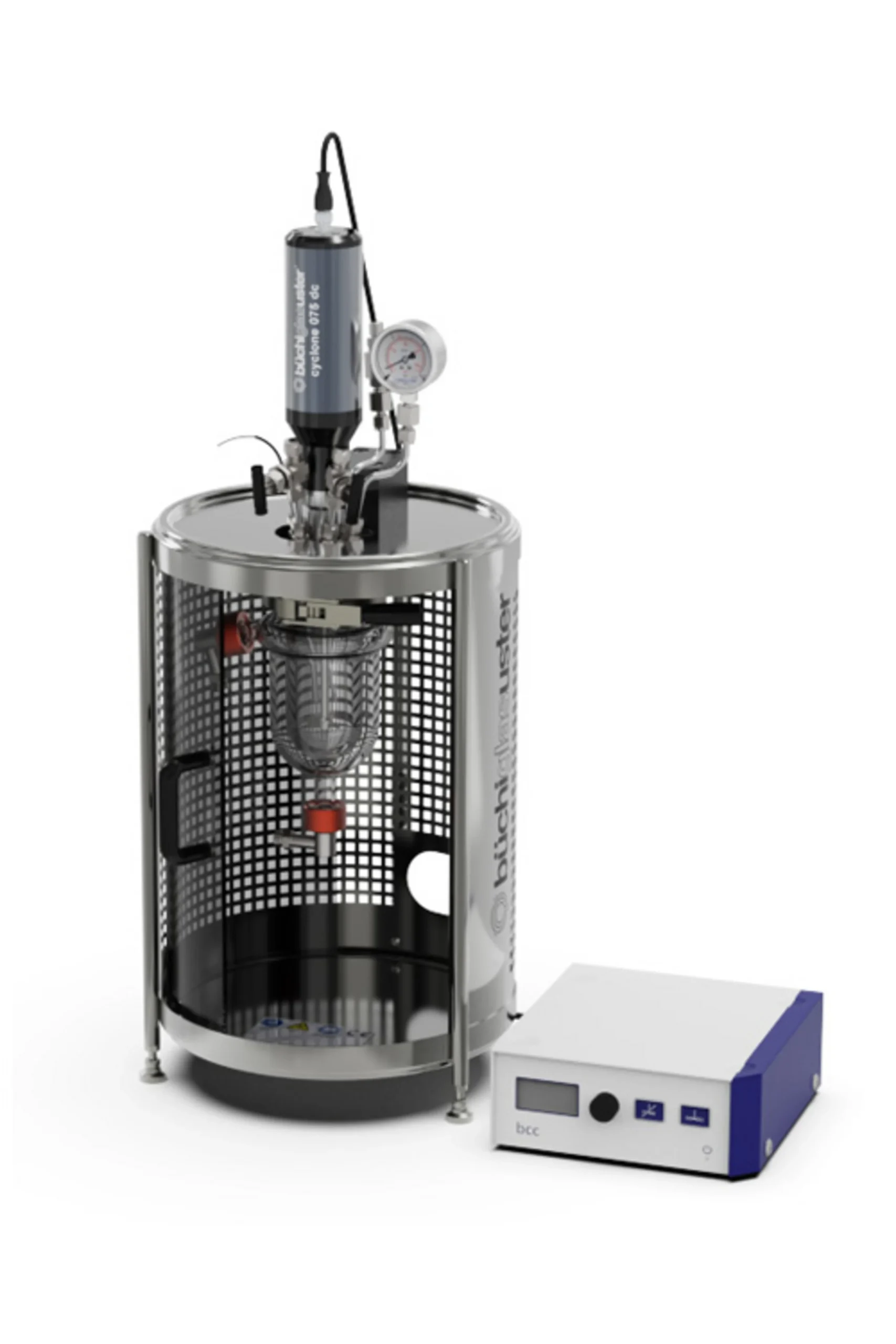
picoclave®

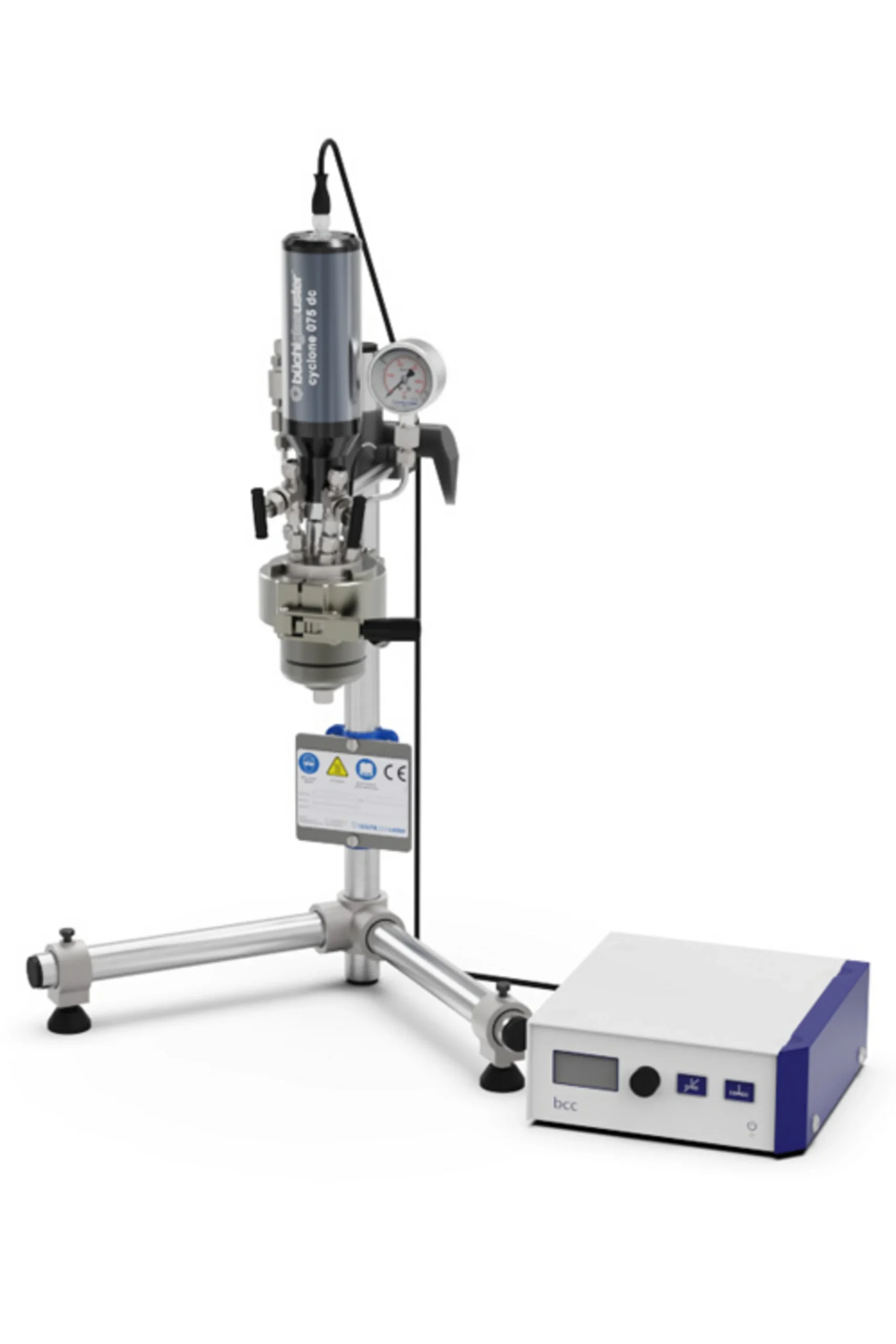
Büchiglas picoclave® — Small Laboratory Pressure Reactor
ADVANTAGES
APPLICATIONS
TECHNICAL SPECIFICATIONS
STANDARD EQUIPMENT
VIDEO
Advantages
- Volumes from 100 to 300 ml
- Operating pressure up to 150 bar
- Temperatures up to 300 °C
- Interchangeable glass and metal reactor vessels
- High acid resistance of glass vessels
- Visual process monitoring
- Magnetic agitator drive for efficient mixing and excellent heat transfer
- Quick reactor closure without tools
- Modular design allowing future modifications and upgrades
- Wide range of accessories
Applications
- Hydrogenation
- Polymerization
- Chemical synthesis
- Catalyst testing and evaluation
- Catalytic reactions
- Crystallization
- Petrochemical research
- Corrosion testing
- Biomass research
- Biopolymer and biofuel research
- Biorefineries
- Zeolite synthesis
- Nanoparticle synthesis
Technical Specifications
- Volume: 100–300 ml
- Pressure: −1 bar (full vacuum) to 150 bar
- Temperature: −20 °C to +200 / 300 °C
- Materials: borosilicate glass 3.3, stainless steel, and Hastelloy®
- Type 1: glass vessel, 100/200/300 ml, up to 200 °C and 10 bar
- Type 1B: glass vessel with bottom valve, 100/200/300 ml, up to 200 °C and 6 bar
- Type 3: metal vessel, 100/200/300 ml, up to 300 °C and 150 bar
- Type 3E: electrically heated metal vessel, 100/200/300 ml, up to 300 °C and 150 bar
Standard Equipment
The standard package includes a protective enclosure with polycarbonate sliding doors, reactor vessel with agitator and Pt100 sensor, quick-closing safety system, cover with 6 ports, pressure gauge, safety rupture disc, valves, and Cyclone 075 magnetic agitator drive.
Product Related
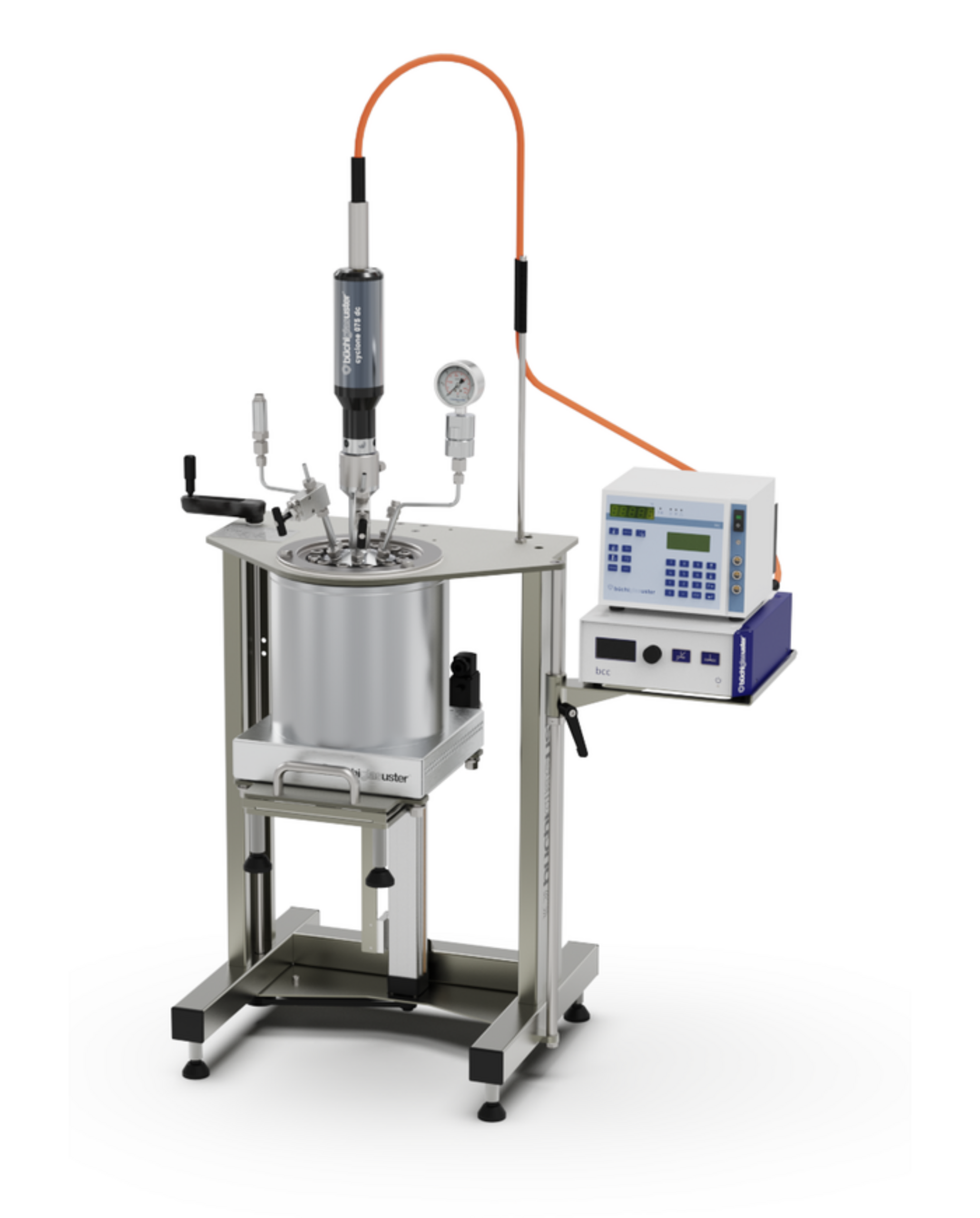
novoclave®
Büchiglas novoclave® — High-Pressure and High-Temperature Laboratory Reactor Büchiglas novoclave® is a laboratory HPHT reactor (High Pressure / High Temperature)…
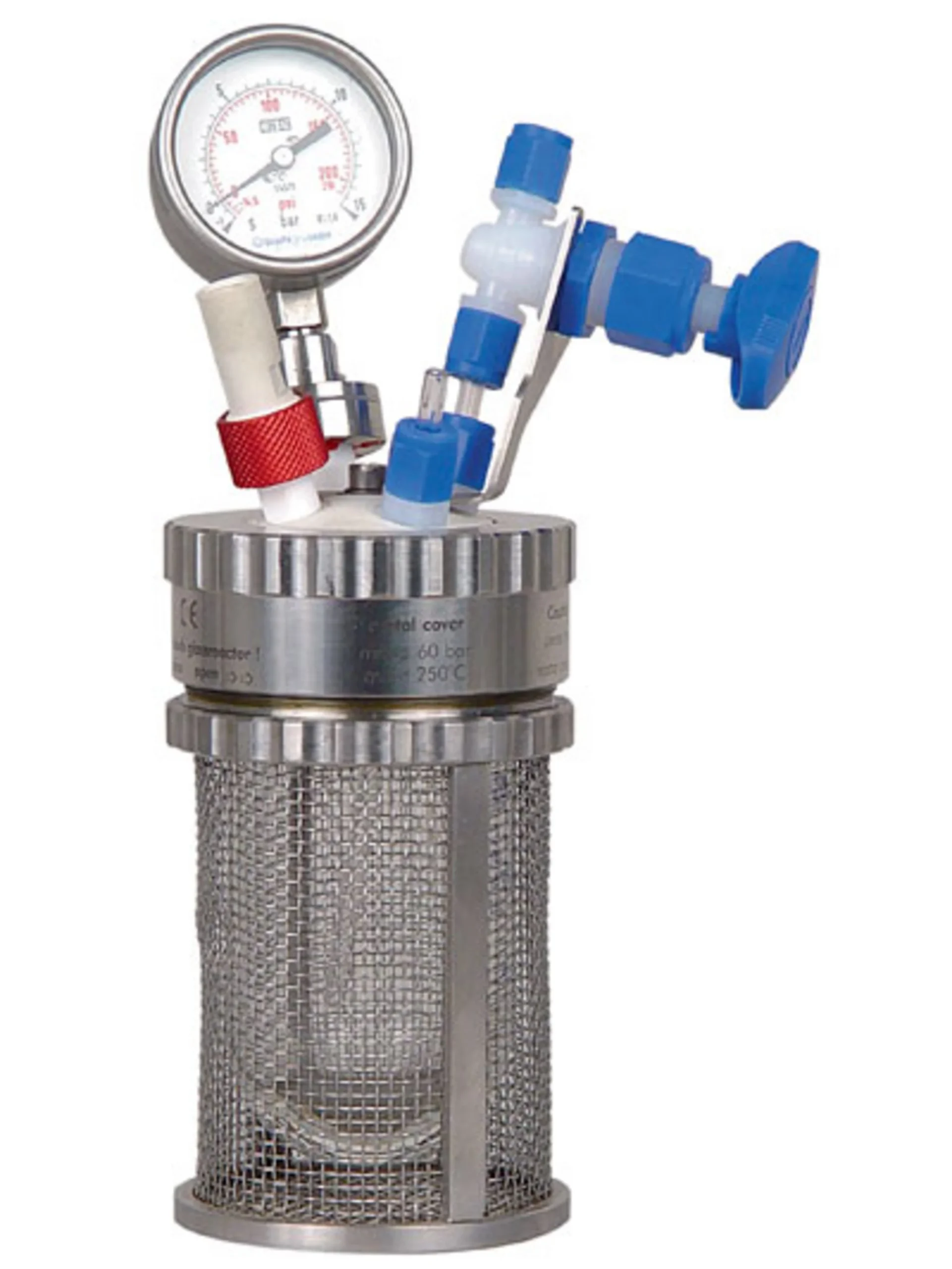
miniclave inert®
Büchiglas miniclave inert® — Metal-Free Laboratory Pressure Reactor Büchiglas miniclave inert® is a laboratory pressure reactor system designed for chemical…
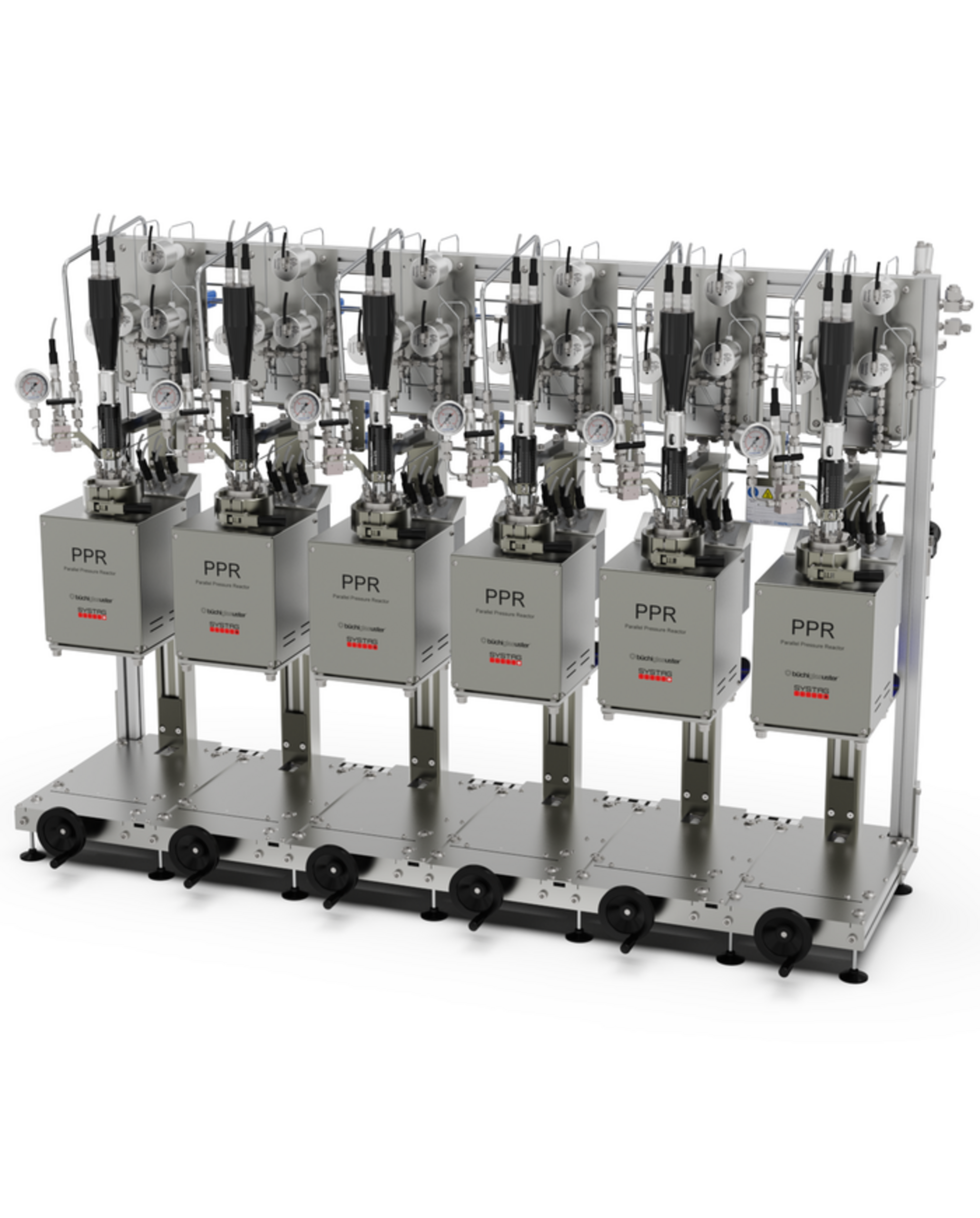
PPR – Parallel Pressure Reactor
Büchiglas PPR (Parallel Pressure Reactor) is a modular system with 2 to 6 pressure reactors, designed for the rapid and…
miniclave drive®
Büchiglas miniclave drive® — Laboratory Pressure Reactor Büchiglas miniclave drive® is a compact, versatile laboratory pressure reactor with a magnetic…