Bruker TRACER 5

Bruker TRACER 5 – Portable XRF Spectrometer
Bruker TRACER 5 is an advanced portable XRF spectrometer designed for fast, reliable, and non-destructive elemental analysis directly in the field or in the laboratory.
It is designed for users who require high sensitivity, flexibility, and full control over measurement parameters. TRACER 5 combines an advanced Silicon Drift Detector (SDD), a flexible X-ray source, and the ability to adapt measurement conditions to the characteristics of the specific sample.
The instrument enables elemental analysis from Na to U, while helium purging extends the elemental range from F to U. This makes it particularly suitable for applications in geology, geochemistry, materials research, archaeometry, conservation, and industry.
Its compact design, battery-powered operation, and low weight make it easy to use in the field, while its advanced configuration options provide users with a high degree of flexibility.
ADVANTAGES
APPLICATIONS
TECHNOLOGY
TECHNICAL SPECIFICATIONS
VIDEO
Advantages
- Fast and non-destructive elemental analysis
- Direct on-site analysis
- Elemental range from Na–U
- Range from F–U with helium purging
- Advanced SDD detector with graphene window
- Energy resolution of <140 eV
- Adjustable X-ray source voltage and current
- Measurement atmosphere selection: air, vacuum, or helium
- Interchangeable 3 mm and 8 mm collimators
- Automatic five-position filter
- Support for user-defined filters and secondary targets
- Integrated camera for precise sample positioning
- Easy operation via touchscreen display
- Wi-Fi and USB connectivity
- PC connectivity
- Support for user-defined calibrations
- Compact and portable design
- Suitable for laboratory and field applications
Applications
Geology and Geochemistry
TRACER 5 is particularly well suited for geological and geochemical research, analysis of geological samples, and characterization of mineral resources.
The ability to perform analysis directly in the field enables rapid testing of large numbers of samples and supports decision-making based on results obtained directly at the sampling location.
Mineral Resource Exploration
The wide elemental range and flexible measurement settings enable the analysis of various mineral and geological samples.
TRACER 5 is suitable for the exploration and characterization of mineral resources, as well as for preliminary field assessment of samples.
Materials Research
Flexible adjustment of voltage, current, filters, collimators, and measurement atmosphere makes TRACER 5 suitable for research and characterization of various materials, as well as for the development of specific analytical methods.
Archaeometry and Cultural Heritage
Non-destructive XRF analysis enables the examination of works of art, archaeological artifacts, ceramics, pigments, and other historical materials without damaging the objects.
Conservation and Restoration
TRACER 5 can be used to identify elements in pigments, metals, glass, ceramics, and other materials found in works of art and historical objects.
Industry and Quality Control
The instrument enables rapid identification and characterization of materials, as well as quality control in various industrial and research processes.
Technology
TRACER 5 uses a Silicon Drift Detector (SDD) with a 20 mm² active area and graphene window. The graphene window provides efficient X-ray transmission, particularly for light elements.
The X-ray source uses a rhodium (Rh) anode, with voltage up to 50 kV and maximum power of 4 W. Voltage and current can be adjusted according to the requirements of the specific analysis.
The instrument offers a choice of 3 mm and 8 mm measurement areas, allowing the analysis to be adapted to the size and characteristics of the sample.
The automatic filter system features five positions, while an additional slot allows the use of user-selected filters or secondary targets.
One of the key features of the TRACER 5 system is the ability to select the measurement atmosphere. The instrument can operate in air, vacuum, or with helium purging, enabling the analysis of light elements down to fluorine.
Technical specifications
Detector: Silicon Drift Detector (SDD), 20 mm², graphene window
Energy Resolution: <140 eV
X-ray Tube: Rh anode
Maximum Voltage: 50 kV
Maximum Power: 4 W
Elemental Range: Na–U in air and vacuum; F–U with helium purging
Collimators: 3 mm and 8 mm
Filter: Automatic five-position filter
Additional Filters: Slot for user-selected filters and secondary targets
Camera: Integrated positioning camera
Display: Touchscreen
Communication: Wi-Fi and USB
Weight: Approximately 1.9 kg with battery
Dimensions: Approximately 27 × 9 × 30 cm
Povezani proizvodi
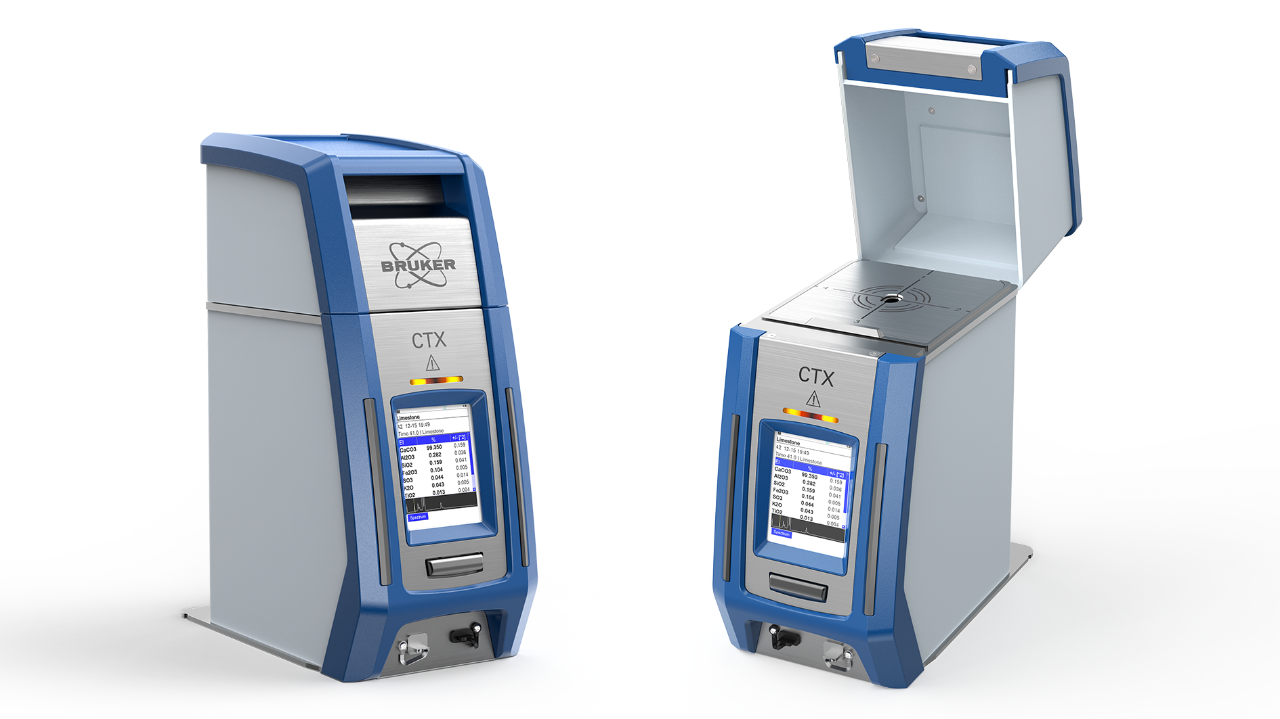
Bruker CTX
Bruker CTX – Portable Benchtop XRF Analyzer Bruker CTX is a compact portable benchtop XRF analyzer designed for fast and…
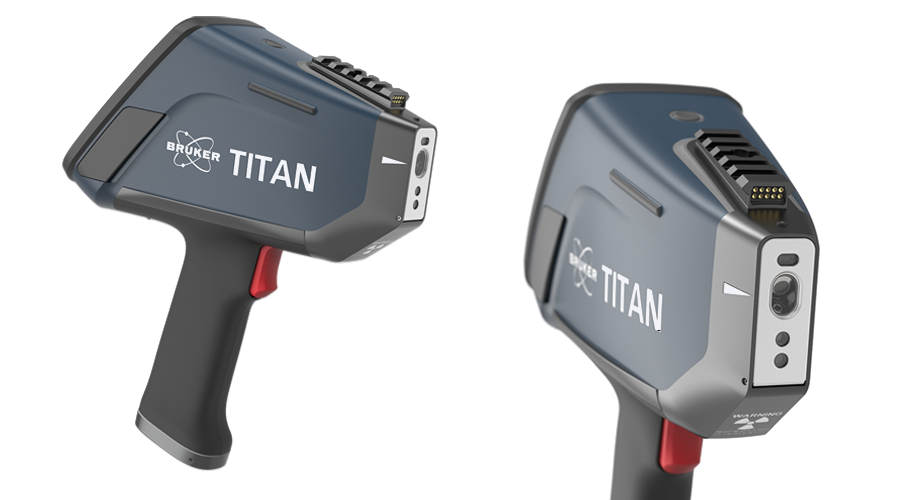
Bruker TITAN
Bruker TITAN – Handheld XRF Analyzer The Bruker TITAN is a compact and robust handheld XRF analyzer designed for fast,…
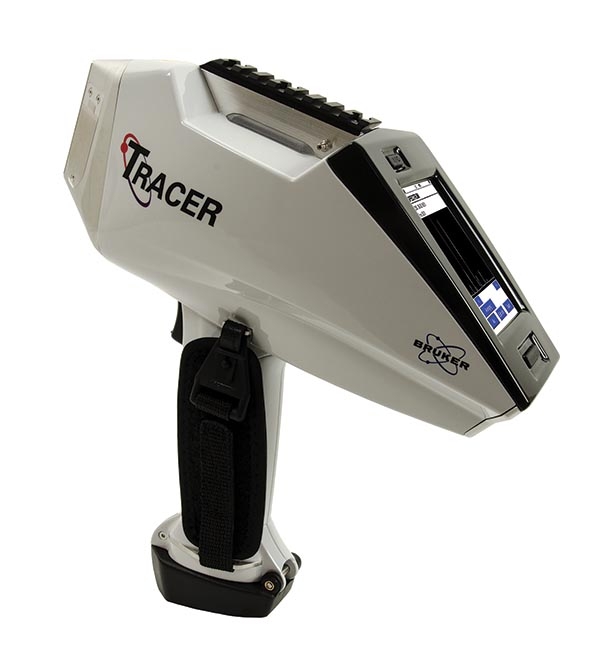
Bruker TRACER 5
Bruker TRACER 5 – Portable XRF Spectrometer Bruker TRACER 5 is an advanced portable XRF spectrometer designed for fast, reliable,…